


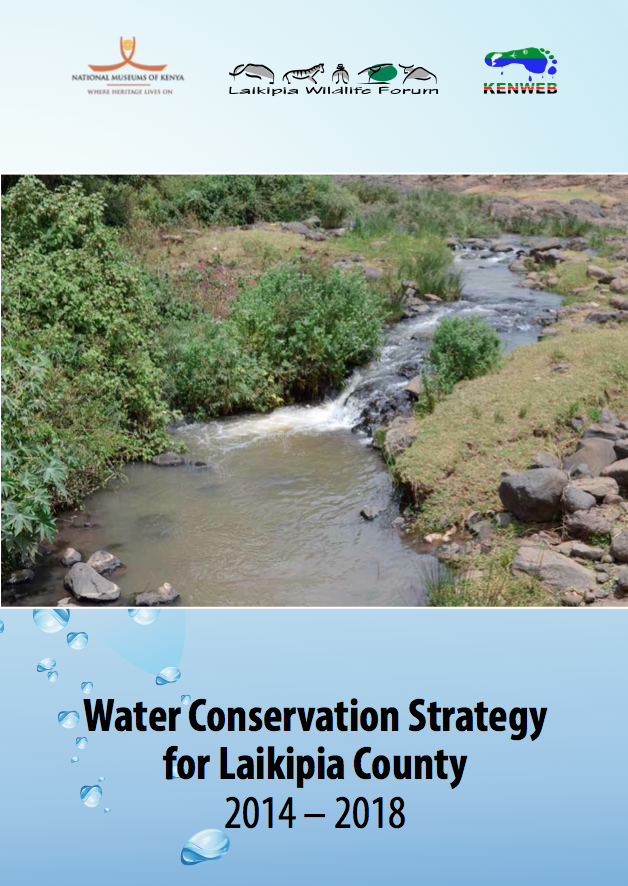
Laikipia Water Strategy
Â
Â
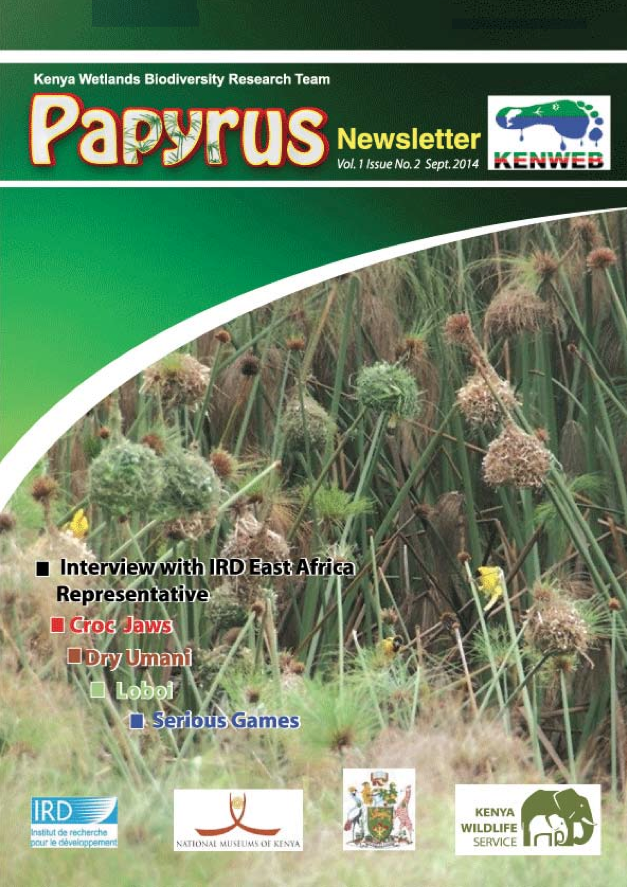
Newsletter
Â
Â

News Archive
Honorary members
Honorary members
Associated Members
Associated Members
Researchers

Dr. DOROTHY NYINGI
Wanja Dorothy Nyingi or Wanja, as she is commonly known, is a freshwater biologist and Ichthyologist based in Kenya. She studied at the University of Nairobi where she attained an undergraduate degree in Zoology and Master of Science in Hydrobiology (1998 and 2002). Thereafter she studied at the University of Montpellier 2 and attained a second Masters and a PhD in Ecology and Evolutionary Biology (2004 and 2007). She has worked at the National Museums of Kenya since 1998 carrying out extensive research on freshwater fish biodiversity in Kenya, and is currently the head of Ichthyology. Wanja has since 2010, coordinated the Kenya Wetlands Biodiversity Research Team (KENWEB) a multi-disciplinary team composed of scientists working on East African wetlands and aquatic ecosystems.
In 2013, Wanja authored the first guide to Common Freshwater Fishes of Kenya. This book is the first of its kind and will enhance the knowledge of the variety of fishes of Kenya but is also a useful guide for researchers and students of Ichthyology. She was awarded in February 2016 the Order of Academic Palms (Chevalier of the Ordre des Palmes Académiques), an order of knighthood of France for distinguished academics and figures in the world of culture and education.
Wikipedia link: https://en.wikipedia.org/wiki/Dorothy_Wanja_Nyingi

 Dr. STEPHANIE DUVAIL
Dr. Stéphanie Duvail is a Geographer with the IRD (French Institute for Sustainable Development), member of the UMR PALOC ”Local Heritage, Environment and Globalization”. Her research deals primarily with water and wetland management in Africa, with a focus on floodplains and deltas. She developed research on the impact of large dams on the ecosystems and livelihoods of coastal wetlands and their potential restoration through managed flood releases. She analyses the impact of the changing hydrodynamics on the African deltas and floodplains, with a specific interest on the natural resource access and sharing, on the associated land tenure and public policy issues. She has experience with multi-disciplinary and participatory research.
The focus of her PhD was on a wetland restoration project in Mauritania (Diawling National Park). From 2003 to 2008, she worked in Tanzania in the Lower Rufiji floodplain for the implementation of a participatory observatory of the environment. From 2008 to 2011, she developed, together with the KENWEB team, a “Land and Water” project, in the Tana delta (Kenya) and Rufiji delta (Tanzania) on the link between floods and livelihoods, extended into a second phase (2011-2014) on the impacts of large scale agro-fuel projects. From 2016, she coordinated the WIoDER project « Western Indian Ocean Deltas Exchange and Research network: www.wioder.org, and since 2018, the GDRI-South « DELTAS: Deltas Environmental Long-Term Dynamics and Associated Scenarios» and from 2019 the DIDEM project www.didem-project-en.org . Since September 2018, she is based at the University Eduardo Mondlane in Mozambique, where she develops, with her colleagues, research on the Limpopo and Incomati floodplains (on the water governance transformations, mangroves management and on the plastic pollution) and is representative for the IRD in the country.
 Dr. OLIVIER HAMELYNCK
Olivier Hamerlynck is a research affiliate of the National Museums of Kenya but based at the Eduardo Mondlane University in Maputo, Mozambique within the framework of the Western Indian Ocean Deltas Exchange and Research network (www.wioder.org).
He earned a physician’s degree (MD) at the University of Ghent in Belgium in 1980 and a PhD in Marine and Estuarine Ecology there in 1993, after which he moved permanently to Africa, working for the IUCN in West and East Africa until 2003.
Since then he has been an independent consultant working for various multilateral and bilateral agencies as well as the private sector while being very active in capacity building and research on a volunteer basis. He has authored over 100 peer-reviewed papers, cited over 2000 times.
 Dr. TITUS NDIWA
Profession / Career: Lecturer, University of Nairobi
Qualifications:
University of Montpellier – PhD in Evolutionary Biology and Ecology
Kenyatta University – MSc in Animal Ecology
Kenyatta University – Bachelor of Education, Science
Nakuru High School – KCSE
Osorongai Primary School - KCPE
Relevant Skills / Field of specialization:
Ecology, population genetics, conservation, fish taxonomy
Experience:
He worked at the National Museums of Kenya as a research scientist at the Ichthyology from 2010 to 2015. Joined the University of Nairobi in 2016 as a lecturer where he teaches wildlife management and conservation. He has also been involved in various research studies and consultancies.
KENWEB members
|
Country |
Institution and acronym |
Participants |
|
Kenya |
National Museums of Kenya (NMK) |
Dorothy Nyingi, George Gatere, JosephGathua, Quentin Luke |
|
Kenya |
University of Nairobi |
Nathan Gichuki, Gilbert Koskei, Peter Ng’anga |
|
Kenya |
Kenya Wildlife Service, Wetland department (KWS) |
Judith Nyunja, ErastusKanga, Fred Omengo, Herman Chege |
|
Kenya |
LaikipiaWildlife Forum |
MordecaiOgada, |
|
Kenya |
Deborah Kirby |
Private consultant and writer – environmental ecologist |
|
France |
UMR 208 de l’Institut de Recherche pour le Développement « Patrimoines Locaux » (UMR 208 IRD) |
Stéphanie Duvail, Jean-Luc Paul, Marie-Christine Cormier-Salem |
|
UK |
Centre for Ecology and Hydrology of Wallingford, (CEH) |
Mike Acreman, Olivier Hamerlynck |
|
Belgium |
Université Catholique de Louvain (UCL) |
Steven Bouillon |
|
Netherlands |
UNESCO - IHE |
Paolo Paron |
|
USA |
Tulane Museum of Natural History |
Hank Bart |
|
USA |
StanfordUniversity |
Douglas McCauley |
Associate Members
|
Country |
Institution |
Participants |
|
Kenya |
WRMA |
Henry Njuguna, Daniel Gathima |
|
Kenya |
NEMA |
Bernard Opaa |
|
Kenya |
Nature Kenya |
Paul Matiku, SerahMunguti – through the OPM on deltas |
|
France |
Laboratoire d'étude des Interactions Sol - Agrosystème - Hydrosystème (R144 de l’IRD) (UMR LISAH) |
CrystèleLeauthaud (PhD student), Jean Albergel, Patrick Zante, YannickPépin, Olivier Grunberger |
|
France |
UMR 6554 du CNRS « Littoral, Environnement, Télédétection, Géomatique » (UMR LETG) |
Marc Robin, Paul Fattal, IsmaïlBenyoucef |
|
France |
Institut Français de Recherche en Afrique, Nairobi (IFRA) |
Bernard Charlery de la Masselière, Bernard Calas, Delphine Lebrun |
|
UK |
British Institute in Eastern Africa |
AmbreenaManji |
|
Tanzania |
Institute of Resource Assessment |
Pius Yanda, Amos Majule, Simon Mwansasu |
|
Tanzania |
Water Resource Engineering Programme |
Patrick Valimba |
|
Japan |
International Partnership of Satoyama Initiative |
United Nations University |
Field and Capacity building benefits to NMK:KENWEB has, through the intervention of Zoology Head, responding to a request we made through DRC we received a space for storage for equipment and for maintaining equipment for wetland analyses. So far we have used this equipment to facilitate wetlands studies in which NMK has been involved with no charge to the institution including: the Wetlands Atlas project (Ministry for the environment); collections of fish specimens for the NMK aquarium among others. This office space has been considered for expansion to a Wetlands Resource Centre that we hope NMK would agree to host. However, other partner institutions are also eligible to take on this arrangement. Since 2009, KENWEB has contributed to collections of fauna and flora from Tana River Delta, Umani Springs, LaikipiaCounty and the Loboi Swamp, which have been curated at NMK.
KENWEB is, through its training component, and using funds from various donors currently paying fees for two NMK staff for capacity building including MwadimeNyange (undergraduate student in the herbarium) and Joseph Gathua (Master’s student Ichthyology section). Other students supported are from KWS, UoNbi, LWF and IRD.
KENWEB advisory role: KENWEB members, due to their activities in the field and information provision of  wetlands, have been invited to committees locally and internationally including – Ramsar technical committee (by KWS), the Prime Minister’s Deltas task force (by the OPM), the Tana Delta Management Plan technical committee (by NEMA),the Wetlands Policy task force (by KWS and NEMA), the Tana Delta Ramsar site launch committee (by KWS). This position in the committee is for KENWEB and implies that the scientist of the consortium with the most experience in various areas attends these meetings.The history of KENWEB with TNC dates back to 2011 when we presented a joint project to the US National Science Foundation. Since then we have been invited to join the Tana Basin Partners, which was founded, by TNC, WRMA and UNEP.
KENWEB partners have anMoU with WRMA for the use of an ADCP (Acoustic Doppler Current Profiler; River Ray serial number 61564) for use on research on the Tana River. This equipment purchased by KU Leuven (Belgium) is the subject of a joint cooperation on water resource monitoring and conservation.
Internationally we are also involved in the IPBES (as part of the IUCN major groups) and we are members of the steering committee of the International Partnership of the Satoyama Initiative (IPSI) that was set up under the Convention of Biological Diversity (CBD).
Researchers
 PETER GITAU
Peter Gitau is a research student at KENWEB whose career focus is to understand how ecosystems respond amid anthropogenic, regional and global climatic driven phenomena. This is with the aim to contribute towards better management and conservation of these ecosystems for healthy communities and wildlife.
Currently, he is a PhD research student in the faculty of Geography (Man and Nature- Ecology and evolution) at the Muséum National d'Histoire Naturelle- Alliance Sorbonne University, Paris, France.. His study is focused on using Sedimentary and Paleo-ecological analysis as a contribution to understanding the hydro-ecological and anthropogenic changes in the Tana River Delta, Kenya.
He has a Master of Science (MSc) focused in Ecology from Vrije Universiteit Brussel, and a Bachelors (BSc) in Environmental Conservation and Natural Resource Management from the University of Nairobi. He is also passionate about scientific communication of research to non scientific groups through comics, photography and videography.

 DAVID OUMA
David has a BSc. in Wildlife Ecology and Management (Chuka University) and MSc. Biology of Conservation (University of Nairobi, 2020). Over the last six years he has worked and gained experience and skills spanning freshwater, marine, and coastal ecosystems. Part of this experience has been in research, working in community-managed conservation areas applying various area-based management tools and in project management.
He is a researcher with the Kenya Wetlands Biodiversity Research Team at the National Museums of Kenya and is currently serving as a UN Volunteer based at UNEP Headquarters in Nairobi supporting implementation of a partnership project for marine and coastal governance and fisheries management for sustainable blue growth in the Western Indian Ocean region. David has previously worked as a Fisheries Specialist Intern with The Nature Conservancy in Mombasa.
David is interested in sustainability science and his current focus is on understanding how policies impact the achievement of conservation goals while taking livelihoods into account.
Email: This email address is being protected from spambots. You need JavaScript enabled to view it.

CHRISTINE MBURU
Christine is a practicing Environmental Impact Assessment and Audit Expert, conversant with different approaches for environmental management and community development. Has worked on various multi-institutional projects involving research partnerships with government, civil society, and private organizations. She holds an MSc. in Limnology and Wetland Management jointly from Egerton University, Kenya; BOKU University, Austria; UNESCO-IHE Institute of Water Education, Netherlands, and a BSc. in Environmental Conservation and Natural Resource Management from The University of Nairobi.
She has demonstrable experience in applying multipronged tools and methods for socio-ecological surveys and development project review. She is adept at communicating, with project results published in peer reviewed journals, books, magazines and social media platforms. She possesses good capacity for observing and mediating social and political processes; collaboration and approaching operational issues. Her aim is to advance in knowledge and understanding of the conflicting relationships between economic development and natural resource dependency in Africa, and to examine approaches for their resolution
 JOYLENE KANYARI
Joylene Kanyaris is a Research Scientist at the National Museums of Kenya at the Wetlands and Marine Programme, Center for Biodiversity Department. She graduated with a Bachelor of Science (Botany) at University of Eldoret in 2013. She received VLIRUOS Scholarship in 2014 to pursue a Master of Biology at Vrije Universiteit Brussels, Belgium which she completed in 2016. Joylene was employed at the National Museums of Kenya in 2018 at the Center for Biodiversity under the Wetlands and Marine Programme.
Research Interest
Joylene has a great interest in aquatic ecology with a particular interest in Taxonomy/systematics of micro-algae, using micro-invertebrates (Phytoplankton and Zooplanktons) community for assessment and monitoring of aquatic ecosystems, use of aquatic micro-invertebrates as indicators for monitoring and assessment of wetland ecosystems; investigating major determinants of micro-invertebrate community structure in wetlands; investigating the use of aquatic micro-invertebrates as diagnostic indicators of particular causes of ecosystem impairment in wetlands.
Email: This email address is being protected from spambots. You need JavaScript enabled to view it. / This email address is being protected from spambots. You need JavaScript enabled to view it.
 KASHIM OGINGA
Otieno Kashim Oginga has a Master’s degree in Biodiversity and Natural Resources Management from the University of University, 2020. He also holds a bachelor’s degree in Environmental science from Kenyatta University.
Since 2016, Kashim has been a volunteer at the National Museums of Kenya, Zoology department- Ichthyology Section and working as a research fellow at Kenya Wetlands Biodiversity Research team.
My key research interest is aquatics conservation, focusing on freshwater fishes and aquaculture
 WINNIE AWUOR
Winnie is a trainer and the head of fisheries and Aquatic Sciences section, at Siaya institute of Technology. She is also a member of Kenya Wetlands Biodiversity Research Team, KENWEB, and National Youth Guiding and Counselling Association of Kenya. Winnie is a registered Environmental Impact Assessment Expert under the National Environment Management Authority, NEMA.
Winnie attended the University of Nairobi from the year 2012 to 2016 and graduated with a first class honours degree in Environmental Conservation and Natural Resource Management. She received a scholarship to pursue a master’s degree in Fisheries Resource Management at the University of Nairobi and graduated in 2020. Winnie has also started her PhD in Applied Environmental Sciences at the Tokyo University of Marine Sciences and Technology. So far, she has published two articles on microplastics at the African Journal of Marine Science and the Western Indian Ocean of Marine Sciences Association.
Winnie has worked as an intern at the National Environment Management Authority, NEMA, and the National Museums of Kenya where she gathered relevant skills aimed at career progression as well as improving her employability. She’s a disciplined, respectful hardworking, self-driven individual with a strong passion in marine conservation and Management. She enjoys watching wildlife documentaries, playing table tennis and networking.
 HESBORN NYAMBATI
Hesborn Moogi Nyambati is a senior Animal Health Assistant at the National Museums of Kenya at the Nairobi Snake Park and Aquarium, Nairobi National Museum Department. He completed his Diploma course in Applied Biology from The Technical University of Mombasa in 2011. Hesborn was employed at the National Museums of Kenya in 2017 at the aquarium section of the Nairobi Snake Park to help maintain live fish on exhibition. He is also the current chairperson of the Nature Kenya Youth Committee which is mandated to champion awareness towards conservation of different species within the country.
Interest
Hesborn has a great interest in aquatic biology with a particular interest in fish. He also has a keen interest in conservation of different organisms.
Email: This email address is being protected from spambots. You need JavaScript enabled to view it. or This email address is being protected from spambots. You need JavaScript enabled to view it.
More Articles...
Subcategories
Tana Delta, The Movie
Latest News
-
FriOct242014The National Museums of Kenya (NMK) is hosting its 5th edition of the S...
-
FriOct032014Â Â Click image to download strategy
